Shaping a new dimension in interactive, physical play
Define how interactive, physical LEGO play should work—without breaking the simplicity and openness of the LEGO System in Play.
Outcome
Shaped LEGO Smart Play into a cohesive, scalable interaction system through prototyping and play testing.
Role
Senior Play Inventor
Led interaction design, rapid prototyping, and alignment across design, engineering, and product
Due to NDAs and child-safety guidelines, this case study focuses on interaction design, prototyping, and decision-making. Visuals are limited to publicly released material, with details abstracted to highlight how the system was shaped.
Context
LEGO Smart Play introduces a new dimension to the LEGO System in Play.
At its core is the SMART Brick — a 2×4 LEGO brick that responds to how children play through sound, light, movement, and interaction with other models.
The ambition was not to create a screen-based experience, but to extend physical LEGO play with responsive behaviour. A system where models feel alive, while still remaining open-ended and imagination-driven.
Within the Creative Play Lab, the focus was not refining a known product, but discovering what this new category of play could become.
This meant working in a space where direction emerged through experimentation, not specification.
Design Challenge
Design an interactive play system that responds intuitively to how children play:
without screens
without instructions
without reducing the open-ended nature of LEGO
At the same time, help teams align around a product that did not yet fully exist.
This introduced key tensions:
- Simplicity vs technical complexity
- Open-ended play vs structured interaction
- Exploration vs product definition
- Individual features vs a cohesive system


My Approach
I used prototyping as the primary way to explore, define, and communicate interaction.
Rather than designing behaviour upfront, I focused on building playable experiences that could be tested, observed, and evolved.
Exploring Through Prototyping
In early stages, the technology did not yet exist.
We simulated behaviour using:
- hidden speakers to fake sound
- manual triggers to mimic system responses
- Arduino and off-the-shelf components
- even performing sound effects live during testing
The goal was to test the feeling of the interaction, not the fidelity.
→ Prototypes were used to discover what worked before it could be built
Designing for Real Play Behaviour
I focused on how the system responds to natural actions:
- movement and speed
- proximity between models
- roleplay and character interaction
Instead of designing features, we designed responses.
→ Interaction became something players discover, not something we explain
Testing to Shape Direction
We regularly tested with kids to understand:
- what felt intuitive without guidance
- what created excitement and repeat play
- how kids adapted and reinterpreted the system
One key behaviour:
Kids immediately began remixing the system
→ turning a creature into a “monster truck”
→ bringing their own creations to life
→ The system needed to support emergent play, not fixed outcomes
Aligning Teams Through Prototypes
Smart Play required alignment across design, engineering, and product.
Prototypes became the shared language:
- used in Play Discovery sessions
- used to communicate direction
- used to guide decisions
→ Alignment happened through experiencing the play, not describing it
Key Decisions
These decisions emerged through prototyping, testing, and navigating the tension between technical possibility and intuitive play.
Rather than being defined upfront, they were shaped through observing how kids actually interacted with the system over time as the experience became more refined.
Agency over control
Kids consistently showed they wanted control over the experience.
→ The system should always respond to player intent
Not introduce its own goals
Sandbox over game design
Structured experiences limited flexibility and replayability.
→ The system should act as a sandbox, not a predefined game
System over feature
Isolated interactions felt disconnected.
→ Focus shifted toward designing a cohesive interaction system across models
Magic must work in low fidelity
Strong ideas were visible early, even in rough prototypes.
→ Only ideas that felt compelling early were developed further
Outcomes
The SMART Play System enabled rich, replayable experiences where physical actions drive sounds, reactions, and stories—bringing LEGO creations to life while staying true to the core LEGO play principles.
Bringing SMART Play to the World
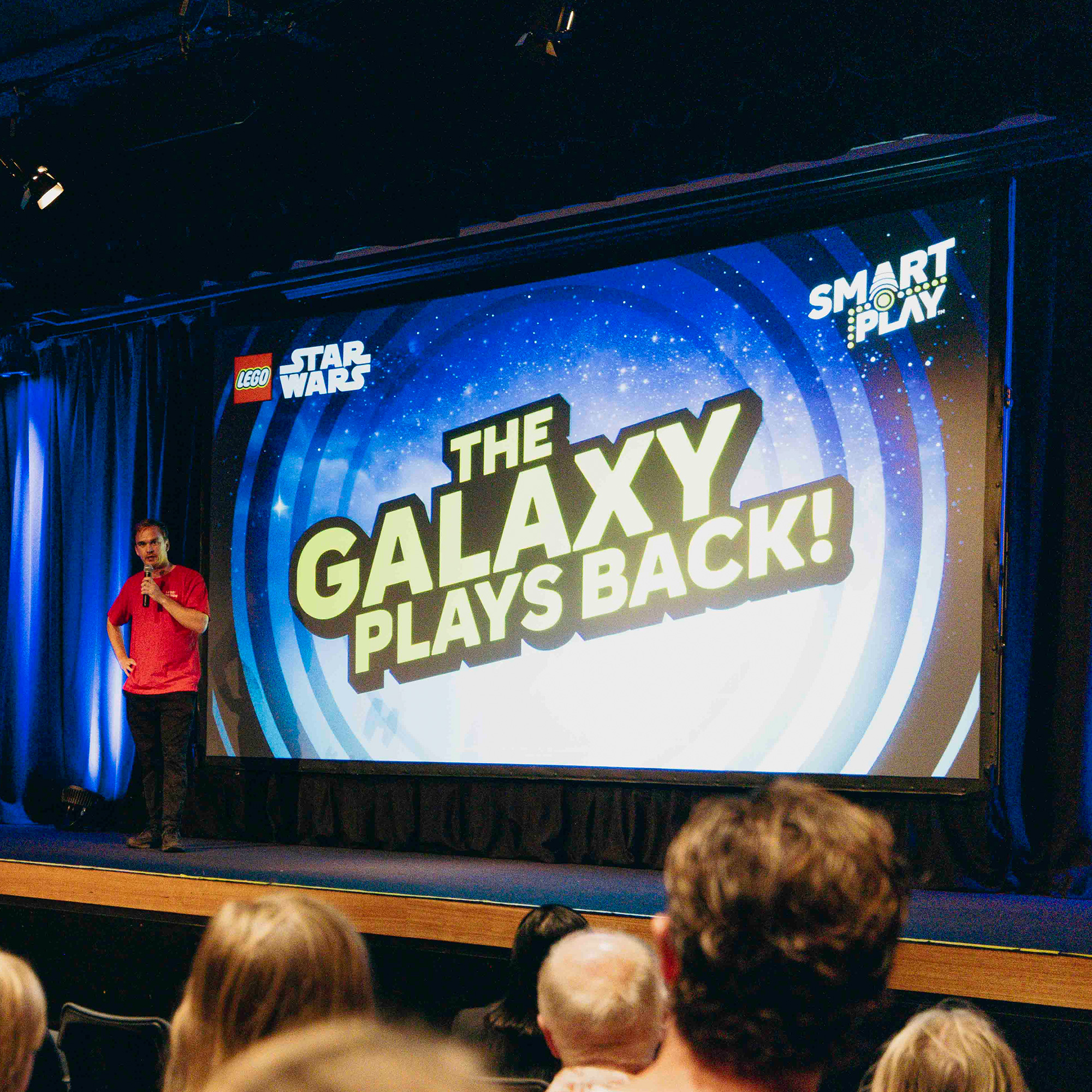
As part of the SMART Play launch, I represented the LEGO Group in public-facing events, as a Local Spokesperson, helping introduce the system, explain its design intent, and demonstrate how it responds to real play.

Explore More Work
LEGO® Super Luigi
LEGO® Super Luigi
Protected: LEGO Smart Play Deep Dive
Protected: LEGO Smart Play Deep Dive
LEGO® Super Mario